
Think about the moment you walk out to your car in Colorado Springs, press a button, or turn the key in the ignition. Your car starts instantly, but a complex security dance just happened in a fraction of a second. If you have ever wondered how transponder car keys work, you are not alone. Most modern vehicles built after the mid-1990s rely on this technology to prevent hotwiring and vehicle theft. It is a system that pairs a tiny microchip inside your key head with your vehicle's engine control unit. Without this silent digital handshake, your car simply will not start, even if the physical key blade perfectly turns the lock cylinder. At Locksmith Solutions LLC, we help local drivers understand their vehicle security every day. Whether you are parked near Palmer Park or commuting down Academy Boulevard, knowing how this system protects your vehicle can save you time and stress when you need a replacement key.
This guide breaks down the science, components, and programming behind your vehicle's transponder system so you can make smart decisions when you need a spare.
The Anatomy of a Transponder Key
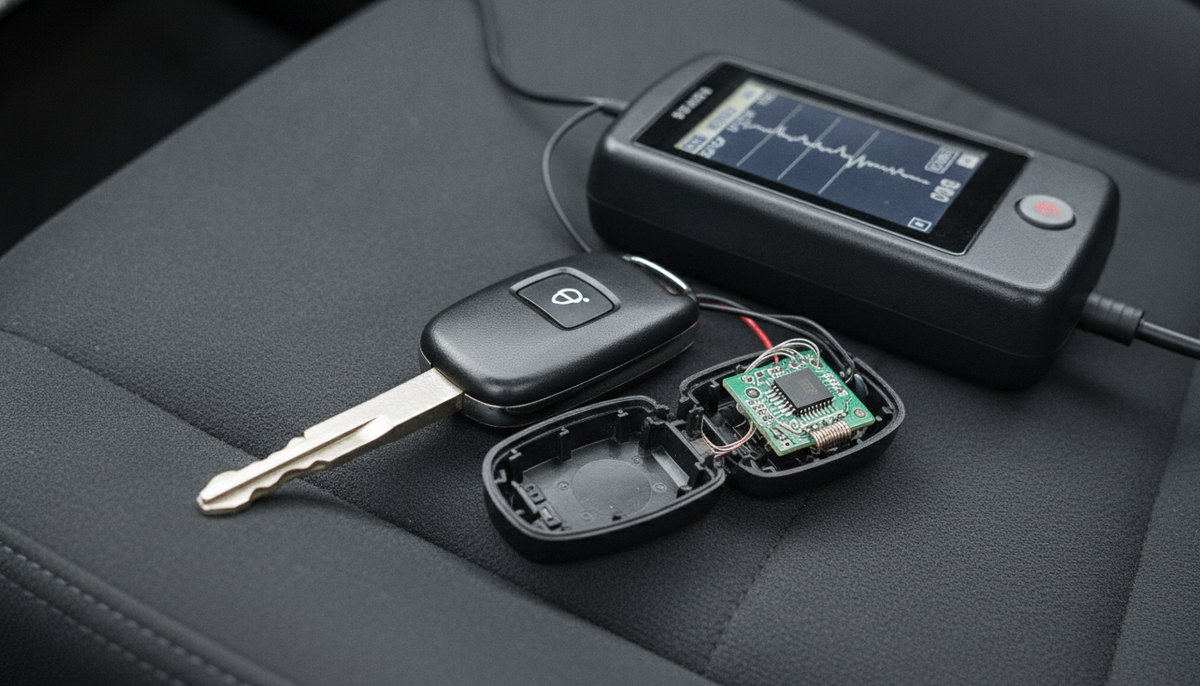
To understand how these keys protect your vehicle, we have to look past the metal blade and examine what is hidden inside the plastic head. Inside every transponder key sits a tiny, passive microchip. This chip is incredibly small, often no larger than a grain of rice, and it does not require an internal battery to function. Instead, it operates on radio frequency identification, or RFID technology. When you insert your key into the ignition cylinder or bring your smart fob inside the cabin, the vehicle's ignition lock cylinder sends out a small burst of electromagnetic energy. This energy wakes up the passive chip inside your key, powering it up just long enough to transmit a unique, encrypted digital code back to the car's computer. If the code matches the pre-programmed sequence stored in your car's Engine Control Unit (ECU), the immobilizer system disarms, and your engine starts. If the codes do not match, or if there is no chip present at all, the engine might crank for a second but will immediately shut down. In many cars, the fuel pump is disabled entirely, leaving a potential thief stranded. This dual-layer security—physical cuts on the key blade combined with a digital password—is why vehicle theft rates dropped dramatically after manufacturers adopted this technology. Before this technology became standard in the late 1990s, hotwiring a car was relatively simple. A thief only had to bypass the physical lock cylinder to connect the ignition wires. Today, because the ECU acts as a digital gatekeeper, simply turning the ignition switch mechanically is useless without the correct transponder signal. This makes modern vehicles incredibly difficult to steal without the actual programmed key.
- The RFID microchip: A tiny, battery-free chip embedded inside the plastic key head.
- The induction coil: An antenna loop around the ignition lock cylinder that sends power and reads signals.
- The Engine Control Unit (ECU): The car's central computer that verifies the digital security code.
The Digital Handshake and Programming
The communication between your key and your car is often called a digital handshake. This process happens in milliseconds, so fast that you never notice the delay between turning the key and hearing the engine roar to life. When the induction coil around the ignition key slot emits its radio frequency signal, it creates an electromagnetic field. This field induces a tiny electrical current in the transponder chip's antenna. Once powered, the chip broadcasts its unique identification code. The car's receiver picks up this signal, decodes it, and passes it to the immobilizer system. If the code matches, the immobilizer sends an 'all-clear' signal to the engine management system, allowing fuel flow and spark. Because this system relies on unique codes, a new key cannot simply be cut to match the physical lock; it must also be programmed to the car's computer. Programming is the process of teaching your car's ECU to recognize the unique digital signature of a new transponder chip. When you buy a brand-new key, its chip is blank or has a generic factory code. A professional locksmith uses specialized diagnostic equipment connected to your vehicle's OBD-II port to write the new key's unique code into the car's memory. For instance, many modern European and domestic vehicles use rolling codes. This means the transponder chip and the ECU change their code every single time the car is started. If the key and the car get out of sync—which can occasionally happen during a deep battery drain—the car will fail to recognize the key, requiring a professional reset. This dynamic encryption makes cloning the key signal virtually impossible for high-tech car thieves.
A physical key copy will turn your ignition, but without the correct programmed transponder chip, your engine is nothing more than an expensive paperweight.
Why You Cannot Just Cut a Key at the Hardware Store
Many car owners try to save money by taking their car key to a local hardware store or self-service kiosk to get a quick copy. While these places can easily duplicate the physical metal blade of your key, they often lack the specialized programming equipment required for modern transponder systems. If you try to use a basic, unprogrammed metal copy in your ignition, the car's security system will immediately flag it as an unauthorized starting attempt. The engine may crank briefly, but the immobilizer will cut the fuel supply, leaving you stranded. In some vehicles, repeated attempts with an unprogrammed key can trigger a security lockout mode, disabling the ignition system entirely for several hours. To get a fully functional spare key, you need a professional locksmith who can cut the high-security blade and program the chip directly to your vehicle's computer.
Troubleshooting and Replacing Transponder Keys
Like any electronic component, transponder keys can occasionally fail or experience issues. One of the most common signs of a failing transponder chip is your car cranking but refusing to start, often accompanied by a flashing security light on your dashboard. This light might look like a key symbol or a padlock icon. If you see this light blinking rapidly when you try to start your vehicle, it means the car's computer is not receiving a valid signal from the key's transponder chip. Physical damage is a frequent culprit behind these failures. Dropping your key on hard concrete, exposing it to extreme heat, or getting it wet can crack the delicate internal microchip or break the tiny antenna wire inside the key head. If you suspect your transponder key is failing, you can try troubleshooting it by using your spare key. If the spare key starts the car without any issues, you know the problem lies within the first key's transponder chip rather than a faulty ignition coil or a failing car battery. When it comes to replacing a damaged or lost transponder key, you generally have two choices: visiting a local dealership or calling a mobile locksmith. Dealerships often charge premium prices for replacement keys and may require you to tow your vehicle to their service department, which adds to your overall expenses. A mobile locksmith, on the other hand, can travel directly to your location in Colorado Springs, cut the new key on-site, and program it right there in your driveway. This saves you the hassle and cost of a tow truck. Additionally, locksmiths carry a wide variety of key blanks and programming tools for various makes and models, often completing the job in a fraction of the time a dealership would take. Before calling a professional, locate your vehicle identification number (VIN) on your dashboard or driver's side door jamb, along with your car's exact make, model, and year. Having this information ready allows the locksmith to quickly identify the correct transponder chip frequency and key blank for your specific vehicle.
- Verify the issue by testing your vehicle with a spare key to rule out general ignition or battery failure.
- Locate your vehicle's VIN and proof of ownership to provide to your locksmith for security verification.
- Contact a licensed local locksmith to cut and program a new key on-site, avoiding expensive dealership towing fees.
Pro Tip from Locksmith Solutions LLC
Pro Tip: Always keep at least one programmed spare key in a safe place. Programming a second key is much faster and cheaper when a working key is already present.
Frequently Asked Questions
Can a transponder key battery die?
No, the actual transponder chip inside your key does not use a battery. It is a passive RFID chip powered by the electromagnetic field generated by your car's ignition cylinder. If your key has buttons to unlock doors, that remote function uses a battery, but the transponder will still start your car even if that battery is completely dead.
How much does it cost to replace a transponder key?
The cost of replacing a transponder key varies depending on your vehicle's make, model, and year. Generally, a professional locksmith can cut and program a new key for significantly less than a dealership. Dealerships often add extra fees and may require you to pay for towing to their shop.
Can I program a transponder key myself?
Some older vehicles allow you to program a new key yourself using a specific sequence of turning your existing working keys in the ignition. However, most modern vehicles require specialized diagnostic software connected to the OBD-II port to program the chip, which must be done by a professional locksmith or dealer.
Need a locksmith in Colorado Springs?
Call Locksmith Solutions LLC for fast, honest, mobile locksmith service. We serve Colorado Springs and El Paso County seven days a week, with evening hours until 9:30pm on weekdays.