When you decide to invest in a home safe, you are looking for peace of mind. Many homeowners purchase the first cheap box they see online or at a local big-box store, assuming any heavy metal container will keep their jewelry, cash, and documents secure. Unfortunately, many of these entry-level products can be pried open with a simple screwdriver in under two minutes, or they offer zero protection against the intense heat of a house fire. If you want to avoid these costly mistakes, you need to know how to choose a home safe that actually protects valuables. Selecting the right safe involves understanding fire ratings, lock mechanisms, steel thickness, and proper installation techniques. In this guide, we will walk you through the essential factors to consider so you can make an informed decision that truly secures your most precious belongings here in Colorado Springs.
Choosing the wrong safe can give you a false sense of security while leaving your assets vulnerable. Here is what you must look for to ensure your safe does its job when it matters most.
Understanding Fire Ratings vs. Burglary Ratings
Fire safes and burglary safes are built differently to handle completely different threats. A fire safe uses thin steel with moisture-releasing insulation to keep the internal temperature below 350 degrees Fahrenheit, which is the temperature at which paper chars. However, this thin steel is incredibly easy to drill, pry, or cut through. Conversely, a burglary safe uses heavy-gauge steel and complex locking bolts to resist physical attacks, but it may not have the insulating barrier needed to survive a fire. For true protection, you need a safe that addresses both threats. Look for independent testing certifications. Underwriters Laboratories (UL) is the gold standard for testing. A UL Class 350 1-Hour fire rating means the internal temperature will remain below 350 degrees for at least one hour in a standard fire. For burglary, look for UL classifications like RSC (Residential Security Container) or TL-15 (tool-resistant for 15 minutes). If you buy a safe without these independent labels, you are relying on the manufacturer's unverified claims. We always advise Colorado Springs homeowners to evaluate what they are storing before buying. If you are only protecting paper documents, a fire-resistant box might suffice. But if you are storing gold, handguns, or expensive jewelry, physical security must be your primary concern. Let's explore the physical construction elements that keep thieves out of your safe.
- UL Class 350 ratings protect paper documents from charring during a standard fire.
- RSC (Residential Security Container) ratings ensure the safe can withstand a 5-minute physical attack with basic hand tools.
- Composite safes combine fire-resistant barriers with heavy-gauge steel walls for dual-threat protection.
Choosing the Right Lock Mechanism and Steel Thickness
The locking mechanism is the brain of your safe, and the steel thickness is its muscle. You have three primary choices for locks: traditional mechanical dials, digital electronic keypads, and biometric scanners. Mechanical dial locks are incredibly reliable because they do not require batteries or electronic components that can fail over time. However, they are slower to open and can be difficult to read in low-light situations. Digital keypads offer rapid access and allow you to change the combination easily, but you must remember to replace the batteries annually. Biometric locks provide the fastest access using your fingerprint, which is ideal for quick-access home defense safes, but they historically have higher failure rates if your hands are wet or dirty. Regardless of the lock type, ensure it is UL-listed, such as a Type 1 electronic lock or a Group 2 mechanical lock. This ensures the lock itself resists manipulation and drilling. Beyond the lock, look at the active locking bolts. These are the metal rods that extend from the door into the safe frame. You want active bolts on multiple sides of the door, not just the opening side, to prevent prying attacks. Additionally, check for hardplates. These are hardened steel plates placed directly in front of the lock mechanism inside the door to destroy drill bits if a burglar attempts to drill out the lock. Next, we must consider where and how to install your safe to prevent a thief from simply carrying it away.
A safe is only as secure as its weakest point. Investing in a high-quality lock is useless if the safe's door can be easily pried open with a standard crowbar.
The Importance of Steel Gauge
Many consumer-grade safes sold at retail stores are made of 14-gauge or 16-gauge steel. To put this in perspective, 16-gauge steel is only about 1/16 of an inch thick. A motivated intruder can easily slice through this thin metal using a heavy-duty axe, a pry bar, or a cheap angle grinder. For real protection, you should look for a safe constructed with at least 11-gauge steel (approximately 1/8 of an inch thick) or, ideally, 10-gauge to 7-gauge steel for high-value items. The thicker the steel, the longer it takes for an intruder to breach the outer shell, which increases the likelihood that they will give up or trigger an alarm. In the locksmith industry, we often see safes that look massive and imposing on the outside, but are actually filled with lightweight drywall or plastic filler, wrapped in a paper-thin steel skin. Do not be fooled by external dimensions. Always ask for the actual steel thickness of both the door and the walls.
Placement, Anchoring, and Professional Installation
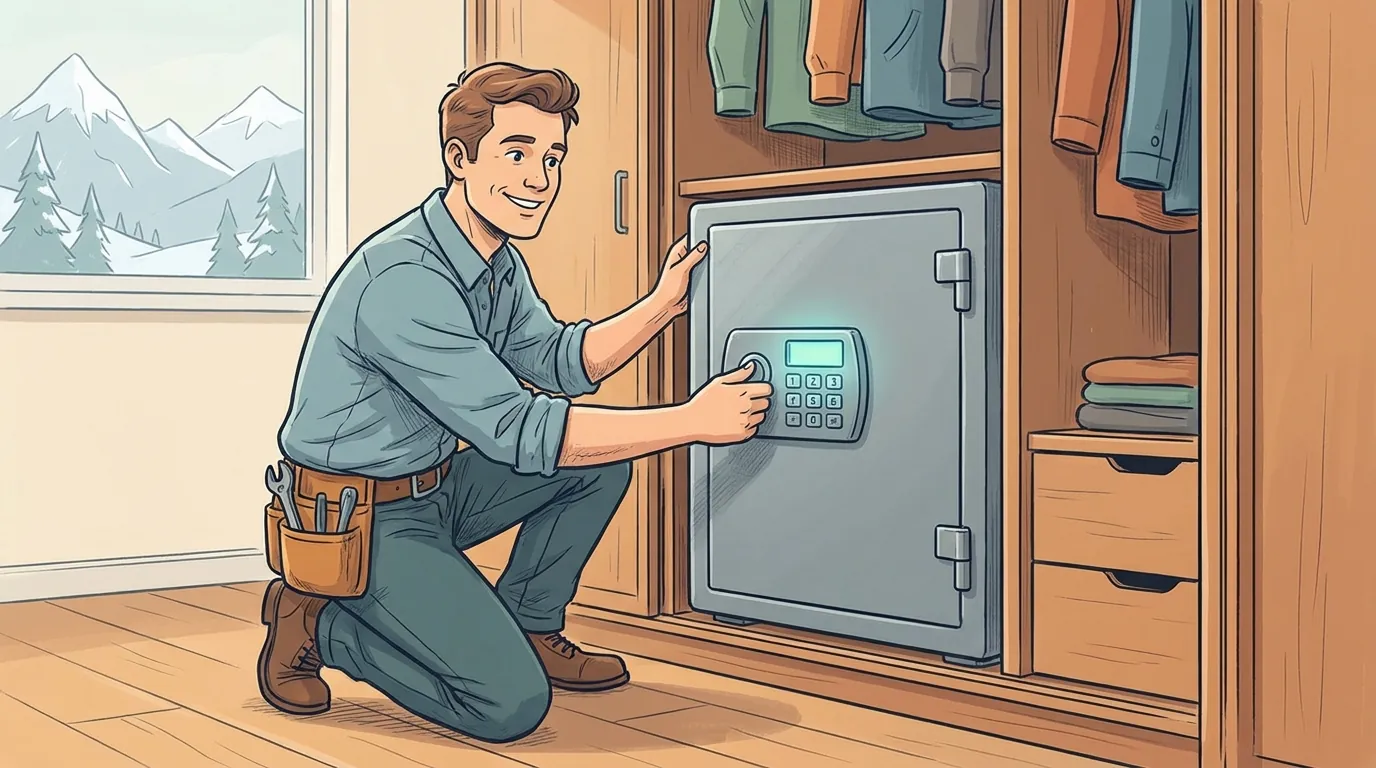
Even the heaviest, most secure safe on the market is vulnerable if a burglar can simply wheel it out of your home on a hand truck. Many residential burglaries involve thieves taking the entire safe to a secondary location where they can use heavy power tools, torches, and grinders to open it at their leisure. To prevent this, your safe must be properly anchored to the structure of your home. Most high-quality safes come with pre-drilled anchoring holes in the bottom or back. Bolting the safe directly into a concrete slab foundation using heavy-duty masonry anchors is the gold standard of installation. If you must install the safe on a wooden subfloor, you should locate the floor joists and use heavy lag bolts, or reinforce the floor from underneath. Additionally, safe placement plays a vital role in security. Avoid placing your safe in highly visible areas like the main living room or a master bedroom closet that is easily visible from a window. Instead, consider discreet locations like a basement, a utility room, or a hidden closet space. When choosing a location, also consider environmental factors. Basements are great for security and fire protection, but they are also prone to flooding or high humidity, which can rust your safe or damage its contents. Using a dehumidifier or silica gel packs inside the safe is highly recommended to protect delicate items from moisture damage. Professional locksmiths in Colorado Springs can help you evaluate your home's layout, select the optimal location, and perform a secure installation that ensures your safe remains exactly where you put it.
- Identify a discreet, low-traffic location in your home away from direct lines of sight.
- Drill through the pre-drilled anchor holes into the concrete slab or heavy floor joists.
- Insert high-quality masonry anchors or lag bolts and tighten them securely to prevent prying.
Pro Tip from Locksmith Solutions LLC
Pro Tip: Always store a physical copy of your safe's combination or backup keys in a secure, off-site location, never inside the safe itself or in an easily accessible drawer nearby.
Frequently Asked Questions
How much does a high-quality home safe cost?
A reliable home safe that offers genuine protection against both fire and burglary typically starts around $500 to $1,200. While you can find cheap lockboxes for under $100, these lack the necessary steel thickness and certified locking mechanisms to resist physical attacks. Investing in a certified safe ensures your high-value items are actually protected.
Can a fire safe protect digital media like USB drives and hard drives?
Standard fire safes are designed to protect paper, keeping internal temperatures below 350 degrees Fahrenheit. However, digital media, DVDs, and USB drives can melt or corrupt at temperatures above 125 degrees Fahrenheit. To protect electronics, you need a specialized 'data safe' or a media cooler insert designed to maintain much lower internal temperatures and humidity levels.
Should I choose a mechanical dial lock or an electronic keypad lock?
Both options have distinct advantages depending on your daily needs. Mechanical dial locks are highly durable, do not require batteries, and can last for decades without electronic failure, though they are slower to open. Electronic keypads offer rapid access and easy code changes, making them highly convenient, but they require regular battery maintenance and have a shorter lifespan.
Need a locksmith in Colorado Springs?
Call Locksmith Solutions LLC for fast, honest, mobile locksmith service. We serve Colorado Springs and El Paso County seven days a week, with evening hours until 9:30pm on weekdays.