

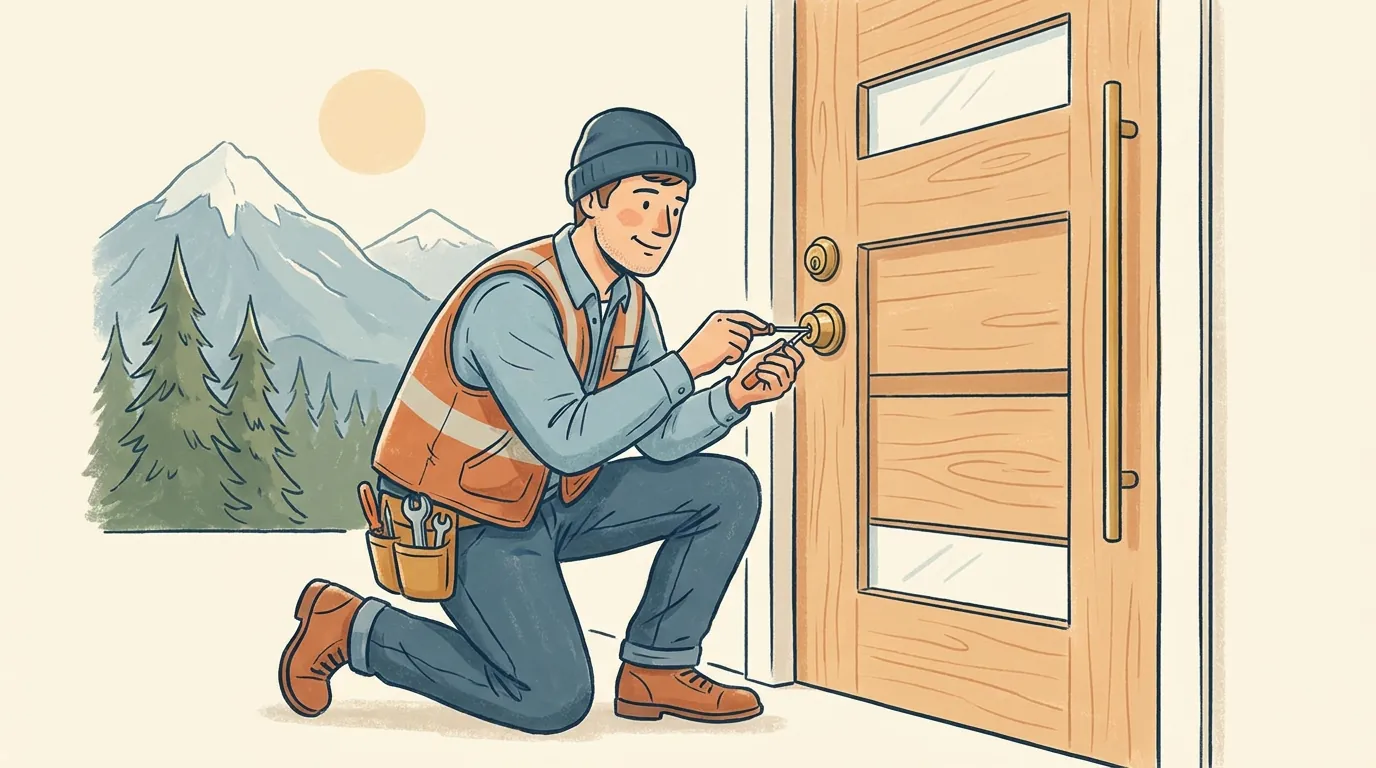
Moving into a new house is an exciting milestone, whether you are settling down in a quiet cul-de-sac in Briargate or buying your first property near Stetson Hills. However, amidst the chaos of packing boxes, changing mailing addresses, and setting up utilities, home security often gets pushed down the to-do list. Many homeowners assume that receiving the keys at closing means they are the only ones with access to their new property. In reality, dozens of people could have copies of those exact keys, from previous owners and their extended family members to real estate agents, contractors, and cleaning crews. Understanding exactly when to rekey your locks after moving into a new home is one of the most important steps you can take to protect your family and your belongings. Taking this simple precaution ensures that you have complete control over who enters your living space from day one.
Securing your new property does not have to be expensive or stressful. Here is a practical guide to help you decide when, why, and how to update your home's physical security.
Why Rekeying Should Be Your Top Day-One Priority
When you sign the final paperwork and receive the keys to your new Colorado Springs home, it feels like a fresh start. But those keys have a history. During the home-selling process, the keys passed through many hands. Real estate agents used lockboxes that sat on the front door for months. Subcontractors, home inspectors, painters, and staging professionals may have had access to those keys to prepare the house for the market. Even before the sale, the previous owners likely distributed spare keys to neighbors, babysitters, relatives, or maintenance workers. It is highly unlikely that the seller managed to retrieve every single duplicate key before handing the property over to you. This is why knowing when to rekey your locks after moving into a new home is so critical. Rekeying is the process of changing the internal pins of your existing lock cylinder so that a brand-new key operates it, rendering all previous keys completely useless. This process gives you immediate peace of mind without the high cost of purchasing entirely new lock hardware. It is a fast, efficient, and highly secure solution that should ideally happen on the very day you take possession of the property. If you delay this task, you leave your home vulnerable to unauthorized entry by anyone who still holds an old key. Many new homeowners wait weeks or even months to address this, believing that a safe neighborhood protects them. However, crime can happen anywhere, and an unsecured lock is an open invitation. By prioritizing this service on day one, you establish a secure boundary for your family, your furniture, and your personal documents before you even unpack your first box. Think about the layout of your new home. You likely have a front door, a back door, a side garage entry, and perhaps sliding patio doors. Each of these entry points represents a potential vulnerability. A professional locksmith can assess all of these openings simultaneously. In many cases, they can even key all of your locks to work with a single, convenient master key, reducing the clutter on your keychain. This level of customization is only possible when you take a proactive approach to your home security right from the start.
- Eliminates access for previous owners, their relatives, and friends.
- Renders lost or copied contractor and realtor keys completely useless.
- Provides an affordable alternative to buying expensive new lock hardware.
Rekeying vs. Replacing: Choosing the Right Option
Many homeowners confuse rekeying with replacing their locks entirely. While both methods improve your home security, they serve different purposes and come with different price tags. Rekeying is almost always the more cost-effective choice. When a locksmith rekeys a lock, they do not remove the decorative handle or the heavy deadbolt housing from your door. Instead, they carefully extract the lock cylinder, swap out the small brass pins inside to match a new key cut, and reinstall the cylinder. The external hardware remains exactly the same. This is highly beneficial if your new home already has high-quality, beautiful handlesets that match the architectural style of your house. Replacing your locks, on the other hand, means buying completely new hardware packages and installing them from scratch. This is necessary if your existing locks are physically damaged, rusted, or worn out. In Colorado Springs, our dramatic weather shifts, ranging from freezing winter blizzards to hot summer sun, can take a toll on exterior door hardware. Over time, cheap locks can warp, stick, or become easy to bypass. If you notice that your new home's locks are difficult to turn, show signs of forced entry, or are cheap builder-grade models, replacing them with high-security deadbolts is the smarter long-term investment. However, if the hardware is sturdy and functions smoothly, rekeying is the fastest path to security. It saves you money on materials while delivering the exact same level of protection against unauthorized keyholders. When deciding between these two paths, consider your long-term goals. If you plan to upgrade to smart locks or electronic keypads in the near future, replacing the hardware now makes sense. Smart locks offer keyless entry, temporary access codes for guests, and remote monitoring via your smartphone. But if you prefer traditional keys and your current brass or bronze hardware is in excellent condition, a simple rekeying service will suffice. It is a straightforward process that a skilled technician can complete in just a few minutes per door, minimizing disruption to your moving schedule.
Rekeying preserves your beautiful, high-quality door hardware while completely resetting your home's security footprint at a fraction of the cost of replacement.
When to Consider a Full Lock Upgrade
While rekeying is the standard recommendation for new homeowners, there are specific scenarios where a full lock replacement is highly recommended. If your new property has outdated locks that do not meet modern security standards, upgrading is essential. Older locks are often vulnerable to simple bypass techniques like lock bumping or picking. Additionally, if you want to integrate your home security with a smart home system, you will need to replace your traditional deadbolts with electronic smart locks. These devices allow you to monitor your entryways from your phone, create temporary digital keys for guests, and receive alerts whenever someone enters your home. If you live in a high-wind or high-moisture area of Colorado Springs, upgrading to heavy-duty, weather-resistant grade 1 or grade 2 locks will ensure your doors remain secure and functional for decades to come. A professional locksmith can inspect the structural integrity of your doors and frames to recommend the best hardware upgrades for your specific neighborhood and lifestyle needs.
A Step-by-Step Security Plan for Your New Colorado Springs Home
Securing your new home involves more than just adjusting the front door lock. To establish a truly secure perimeter, you need a comprehensive plan that addresses every potential entry point on your property. Start by conducting a thorough walkthrough of your new home. Check all exterior doors, including the door leading from the garage into the house, side service doors, and sliding glass patio doors. Sliding doors are notoriously easy to pop off their tracks, so consider adding a secondary locking bar or a specialized patio lock for extra security. Next, inspect the window locks on the ground level. Windows are common entry points for burglars, especially if they are hidden behind mature landscaping or privacy fences. Ensure that all window latches align perfectly and lock securely. If your new home has a detached garage or a backyard shed, do not forget to secure those structures as well. They often contain expensive tools, lawnmowers, and outdoor gear that are highly attractive to thieves. Once you have assessed your entire property, contact a local, licensed locksmith to schedule your rekeying service. It is best to schedule this appointment for the day you move in or the day immediately following your closing. This ensures that no one else has access to your home while you are moving your valuable belongings inside. A local locksmith who understands the specific security challenges of Colorado Springs neighborhoods can provide tailored recommendations to keep your property safe. During the locksmith's visit, ask them to inspect the strike plates on your door frames. Many builders install strike plates with short, half-inch screws that can easily fail if someone tries to kick the door open. Replacing these with heavy-duty strike plates secured by three-inch screws anchors the lock deep into the wooden wall studs, dramatically increasing your door's resistance to physical force. This simple, inexpensive upgrade, combined with professional rekeying, transforms your standard doors into robust security barriers.
- Perform a complete walkthrough of all exterior doors, windows, and garage entryways.
- Schedule a professional locksmith to rekey all exterior locks on your official move-in day.
- Upgrade strike plate screws to three-inch heavy-duty screws for maximum kick-in resistance.
Pro Tip from Locksmith Solutions LLC
Pro Tip: Always test every single newly rekeyed key on all doors before the locksmith leaves your property to ensure smooth operation and perfect alignment.
Frequently Asked Questions
How long does it take a locksmith to rekey a house?
On average, a professional locksmith can rekey a single lock cylinder in about 10 to 15 minutes. For a standard home with three or four exterior doors, the entire process usually takes under an hour, allowing you to quickly get back to unpacking.
Can I rekey my own locks using a DIY kit?
While DIY rekeying kits are available at home improvement stores, they require precise hand-eye coordination and specialized tools. If you make a small mistake, you can easily ruin the lock cylinder, leading to an expensive emergency replacement. Hiring a licensed locksmith ensures the job is done correctly and safely.
Is it cheaper to rekey or replace locks?
Rekeying is significantly cheaper than replacing your locks. With rekeying, you only pay for the locksmith's labor and a few inexpensive internal pins. Replacing locks requires purchasing entirely new locksets, handles, and deadbolts, which can cost hundreds of dollars more.
Need a locksmith in Colorado Springs?
Call Locksmith Solutions LLC, your local locksmith in Colorado Springs, for fast, honest, mobile service. We serve Colorado Springs and El Paso County seven days a week, with evening hours until 9:30pm on weekdays.