

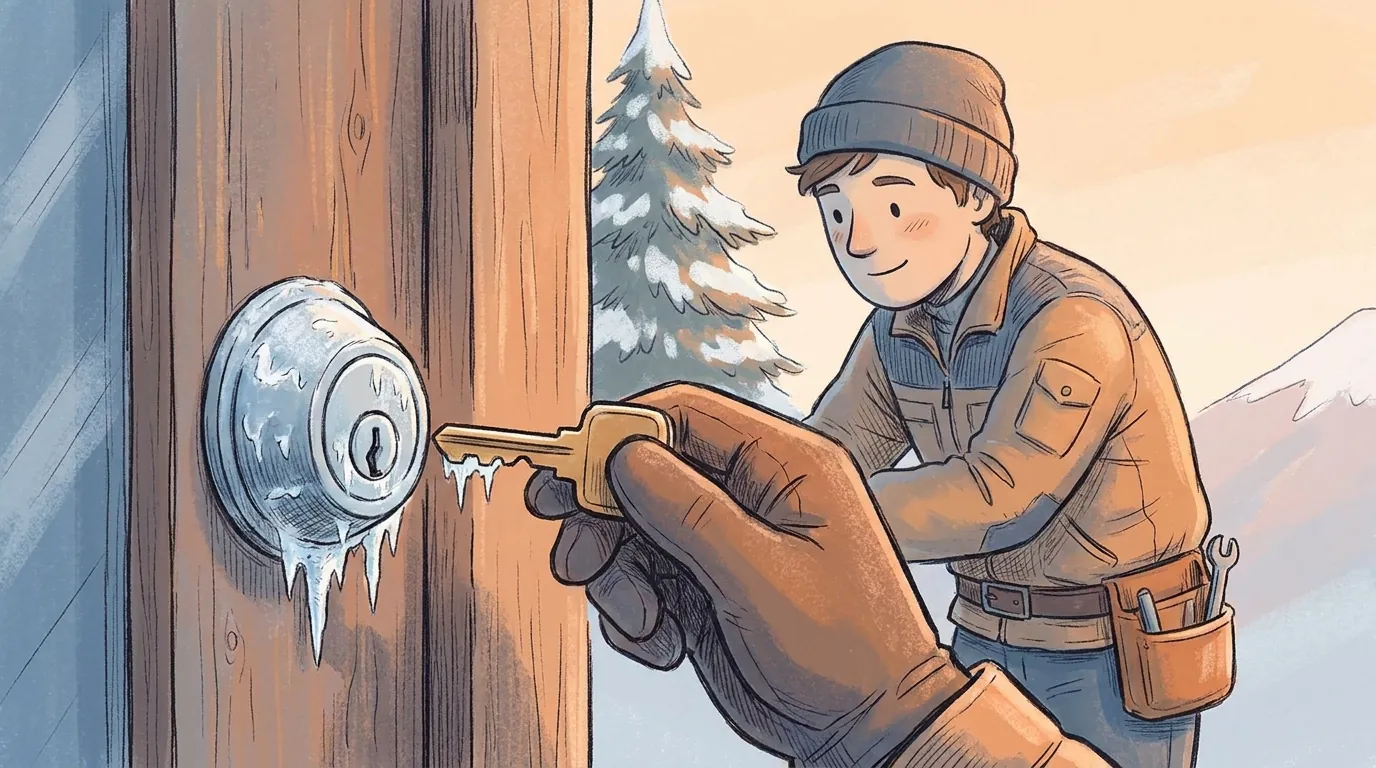
Winter in Colorado Springs brings stunning views of Pikes Peak, but it also brings freezing temperatures that can wreak havoc on your home and vehicle locks. Walking out to your car or trying to get into your front house door only to find the key won't turn, or won't even go into the keyway, is an incredibly frustrating experience. When moisture gets trapped inside the lock cylinder and temperatures drop below freezing, ice forms and binds the delicate internal pins. If you try to force the key, you risk snapping the metal right off inside the cylinder, turning a minor annoyance into an expensive emergency. Knowing how to safely open a frozen door lock in winter is an essential skill for every Colorado homeowner and driver. By using the right techniques and avoiding common, damaging mistakes, you can restore access to your property quickly without causing permanent damage to your locking mechanisms.
Before you grab a pair of pliers or try to force your key with all your strength, take a deep breath and read this guide to thawing your lock safely.
The Science of Frozen Locks and Why Forcing It Fails
To solve the problem of a frozen lock, it helps to understand exactly what is happening inside the mechanism. Your door lock relies on a series of tiny, spring-loaded pins that must align perfectly with the shear line of the cylinder for the plug to turn. When winter weather hits Colorado Springs, moisture from snow, sleet, or even high humidity can seep into these tiny crevices. As the temperature drops through the night, this moisture freezes solid, encasing the pins, springs, and plug in a block of ice. When you insert your key, the ice prevents the pins from moving up and down freely. If you attempt to force the key to turn, you are applying immense rotational torque to a tiny piece of brass or aluminum. Because cold temperatures make metal more brittle, the key can easily snap in half, leaving you with a broken key stuck deep inside a frozen lock. Additionally, forcing the mechanism can bend the internal brass pins, strip the cylinder, or damage the delicate springs, requiring a complete lock replacement rather than a simple thaw. Taking a patient, methodical approach is always the safest path forward. It is much easier to spend ten minutes gently warming a lock than it is to extract a broken key or replace an entire deadbolt in sub-zero temperatures. Think about the microclimate of your entryway. If your front door lacks a protective porch or awning, it is directly exposed to blowing snow and freezing rain. Even the warmth from inside your home can contribute to the problem; warm, humid indoor air escaping through tiny gaps around the door frame can condense when it hits the freezing cold metal of the lock cylinder, creating a layer of frost inside. For vehicles, washing your car during a cold snap can force water directly into the keyholes, where it quickly solidifies. Understanding these environmental factors helps you realize that a frozen lock is not a mechanical failure, but a temporary physical obstruction. By addressing the ice directly rather than fighting the metal components, you preserve the integrity of your security system.
- Moisture entry from blowing snow, freezing rain, or high-pressure car washes.
- Condensation caused by warm indoor air escaping through drafty door seals.
- Brittle metal conditions that increase the risk of key breakage under pressure.
Safe and Effective Methods to Thaw Your Lock
When you find yourself locked out in the cold, your primary goal should be to introduce gentle, controlled heat to melt the ice inside the cylinder. One of the simplest and safest methods is using your own body heat or a portable heat source. If you have access to a lighter or match, you can carefully heat the metal blade of your key. Hold the key with a glove or pliers to protect your fingers, warm the blade for a few seconds, and then gently insert it into the frozen lock. Do not force it; let the warm metal melt its way in. You may need to repeat this process several times, heating the key, inserting it, and letting the heat transfer to the frozen pins. Another highly effective tool is a standard hair dryer. If you can run an extension cord to your door, direct the warm air from the hair dryer straight at the lock cylinder for a few minutes. To trap the heat, you can cup your hands around the lock or use a cardboard tube to funnel the warm air directly onto the keyway. If you are dealing with a frozen car door lock, simply pressing your thumb firmly against the metal lock cylinder for a couple of minutes can sometimes transfer enough body heat to melt a thin layer of frost. For those who want a quick, portable solution, commercial lock de-icers containing isopropyl alcohol are excellent to keep in your bag or coat pocket. The alcohol rapidly lowers the freezing point of the water, melting the ice almost instantly. When using a commercial de-icer, look for products that contain a light lubricant like silicone or graphite alongside the alcohol. The alcohol will evaporate quickly, but the lubricant will remain behind to coat the internal pins and repel future moisture. Shake the can well, insert the nozzle directly into the keyway, and spray a small amount. Wait about thirty seconds for the chemical reaction to take place, then gently insert your key and wiggle it back and forth to distribute the fluid. If the key still does not turn, do not force it. Apply another short spray and wait a bit longer. This patient approach ensures that you do not damage the lock's internal wafers or scratch the cylinder housing.
Never use an open flame directly on the lock cylinder itself, as this can scorch your door's finish, melt internal plastic components, and ruin the lock's finish.
The Danger of Using Boiling Water
It is incredibly tempting to run inside, boil a kettle of water, and pour it directly over a frozen lock. While this might seem like a quick fix that will melt the ice instantly, it is actually one of the worst things you can do. The extreme temperature differential between the boiling water and the freezing metal can cause thermal shock, potentially cracking the lock cylinder or warping the door handle. Furthermore, once the hot water melts the initial ice, it will flood the entire lock mechanism and the surrounding door frame. Within minutes, as the water cools down in the freezing Colorado Springs air, it will freeze solid again. This leaves you with a far worse problem than you started with: a lock completely encased in a thick, solid block of ice that is much harder to thaw. Additionally, water can seep into the wooden door frame, causing it to swell and warp, or damage the electronic components of smart locks.
When Colorado Springs Locks Actually Freeze
Most people expect frozen locks in January, and January certainly delivers them. But the calls start earlier than that every year, and they cluster in a way that has more to do with how Front Range weather behaves than with how cold it gets. At just over 6,000 feet, the first freeze in Colorado Springs usually lands in the first half of October, and it is common to see snow before it. What catches people out is not the depth of the cold but the swing. A December day here can reach the high forties under full sun and then drop into the teens overnight. That single day is a complete freeze-thaw cycle, and a lock only needs one of them to seize.
Here is why the swing matters more than the low temperature. During the warm part of the day, snow on the door frame, on the roofline above the entry, or packed into the seam of a car door melts and runs. Liquid water finds its way into the keyway, wicks down between the pins, and settles in the bottom of the cylinder where it cannot drain. Then the sun goes down, the temperature falls twenty or thirty degrees in a few hours, and that water becomes ice exactly where it does the most damage. A lock that sat through a steady, dry, ten-degree week without complaint can jam solid on the first sunny afternoon that follows a snowfall. It also explains something that surprises most homeowners: south-facing and west-facing doors, the ones that get the most afternoon sun, tend to freeze more often than the shaded north side of the same building, because they are the ones melting and refreezing every single day.
The practical consequence is that the window for doing something about it is open now, not in December. Graphite, fresh weatherstripping, and a simple keyhole cover all work, but only if they go on a dry lock, before moisture is already sitting inside the cylinder. Once water has been through a few freeze-thaw cycles it has carried grit down into the mechanism, and lubricating on top of that traps the problem rather than clearing it. If you want your locks to behave this winter, the work belongs in September and the first days of October, while the cylinders are still dry and the afternoons are still warm enough for a lubricant to spread properly.
- Early October is the usual first freeze here, and snow can arrive ahead of it.
- Freeze-thaw swings, not sustained cold, are what drive water into a cylinder and jam it.
- Sun-facing entries freeze more often than shaded ones, because they melt and refreeze daily.
- Winterize while the lock is still dry, which in practice means September into early October.
Preventative Maintenance to Stop Locks from Freezing
The best way to handle a frozen lock is to prevent it from freezing in the first place. Taking a few proactive steps during the autumn months can save you from a cold, frustrating morning later in the winter. The key to prevention is keeping moisture out of the lock cylinder and ensuring that any water that does enter cannot cling to the metal components. Start by cleaning and lubricating your locks before the first freeze hits Colorado Springs. Avoid using heavy oils or WD-40 for long-term lubrication, as these products can attract dirt, dust, and grime over time, creating a sticky residue that actually gums up the pins and makes freezing more likely. Instead, use a dry graphite lubricant or a high-quality PTFE (Teflon) spray. These dry lubricants coat the internal components, allowing them to move smoothly while actively repelling moisture. To apply, simply puff a small amount of graphite powder or spray a quick burst of PTFE lubricant directly into the keyway, insert your key, and turn it back and forth several times to distribute the lubricant. Another excellent preventative measure is to inspect the weatherstripping around your doors. Damaged or worn weatherstripping allows warm, moist air from inside your home to escape, which condenses on the cold metal lock and freezes. Replacing old seals keeps your home warmer and your locks dry. For vehicles, applying a thin layer of silicone lubricant to the rubber door seals prevents the doors themselves from freezing shut against the frame, which is just as common as a frozen lock cylinder. Additionally, consider the physical exposure of your entryways. If you have a side door or garage door that is constantly exposed to the elements, installing a small metal lock cover or a simple magnetic keyhole cover can block blowing snow and rain from directly entering the keyway. For business owners, ensuring that outdoor locks are shielded from runoff from gutters is crucial. A dripping gutter directly above an entry door will guarantee a frozen lock during a freeze-thaw cycle. By taking these simple, inexpensive preventative steps every autumn, you can ensure your locks operate smoothly all winter long, no matter how low the temperature drops.
- Clean the lock cylinder with a dedicated electronic cleaner to remove old dirt and sticky residue.
- Apply a dry graphite or PTFE-based lubricant to coat the internal pins and repel moisture.
- Inspect and replace worn weatherstripping around the door frame to prevent warm air condensation.
Pro Tip from Locksmith Solutions LLC
Pro Tip: Keep a small can of lock de-icer in your purse, backpack, or garage. Never lock it inside the car or house you might get locked out of!
Frequently Asked Questions
Can I use WD-40 to unfreeze my door lock?
While WD-40 can displace water and temporarily help thaw a lock, it is not recommended for long-term use. It leaves behind a sticky residue that attracts dust and grime, which will eventually clog the delicate pins and make the lock more prone to freezing in the future. Use a dry graphite or silicone-based lubricant instead.
What should I do if my key breaks off inside the frozen lock?
If your key snaps, do not attempt to force the remaining piece or glue it back together. Stop immediately and call a professional locksmith. Trying to extract it yourself without the proper tools can push the broken fragment deeper into the cylinder, damaging the pins and requiring a costly lock replacement.
When should I winterize my locks in Colorado Springs?
Aim for September through the first week of October, before the first hard freeze. Lubricant and weatherstripping only work on a lock that is still dry inside. Once meltwater has been through a few freeze-thaw cycles it carries grit into the cylinder, and adding graphite on top of that seals the problem in rather than clearing it.
How do I prevent my car doors from freezing shut?
To prevent car doors from freezing shut, apply a thin coat of silicone lubricant or rubber conditioner to the rubber weatherstripping seals around the doors and frame. This creates a barrier that prevents water from sticking and freezing the rubber to the metal frame, allowing you to open the door easily.
Need a locksmith in Colorado Springs?
Call Locksmith Solutions LLC for fast, honest, mobile locksmith service. We serve Colorado Springs and El Paso County seven days a week, with evening hours until 9:30pm on weekdays.