
To stop tailgating at a secured door, fix the door before you lecture the people. Most strangers who walk in behind a resident or an employee get in during the few seconds the door hangs open, or through a door that closed but never latched. A door closer set to shut and latch quickly, a latch that actually catches, and an access system that sounds an alert when the door is held or propped will do more than any sign. After that, one habit matters most: pull the door shut behind you and let the next person use their own card, fob or code.
This question has been coming up locally for a reason. In September, Colorado College Campus Safety warned students after two burglaries in a residence hall, and the advice was pointed: do not let anyone "piggyback" through a secured door behind you, do not prop doors open, and do not tamper with locks or latches. In the same weeks Colorado Springs police asked for help finding a suspect in separate break-ins at campus buildings, the first reported on September 1. A dorm is just an apartment building with a card reader. The same thing happens at offices, medical suites and apartment communities all over Colorado Springs.
Tailgating vs. Piggybacking
The two words get used for the same problem, but they are slightly different, and the fix is different too.
- Tailgating is when someone slips in behind you without you noticing or agreeing. You badge in, the door swings slowly closed, and a person you never saw catches it. That is mostly a door problem.
- Piggybacking is when you let them in. You hold the door for the person with the boxes, the one who says they forgot their fob, or the one who just looks like they belong. That is mostly a people problem.
Start With the Door: Why It Stays Open Too Long
When we get called to a building because "people keep getting in", the access system is usually fine. The door is the weak point. These are the four things we find most often.
The closer is set too slow, or it is worn out
The arm at the top of the door is a hydraulic door closer. It has separate adjustments for the main swing and for the last few inches, where the door has to push the latch into the frame. If the swing is set slow, the door hangs open long enough for a second and third person to walk through. If the closer is leaking oil down the door or the arm is loose, no adjustment will hold. Our door closer installation and repair service covers both the adjustment and the replacement.
Cold and wind change how the door closes
This one is very Colorado Springs. The oil inside a closer thickens in the cold, so a door that closed fine in August can drift shut slowly in a November cold snap and stop short of latching. Add a windy day on the west side or out in Falcon, and a door that faces the wind may not have the force to close against it, while a door on the sheltered side slams. Exterior closers here usually need a look when the season turns, and sometimes a closer rated for the temperature range.
The door closes but does not latch
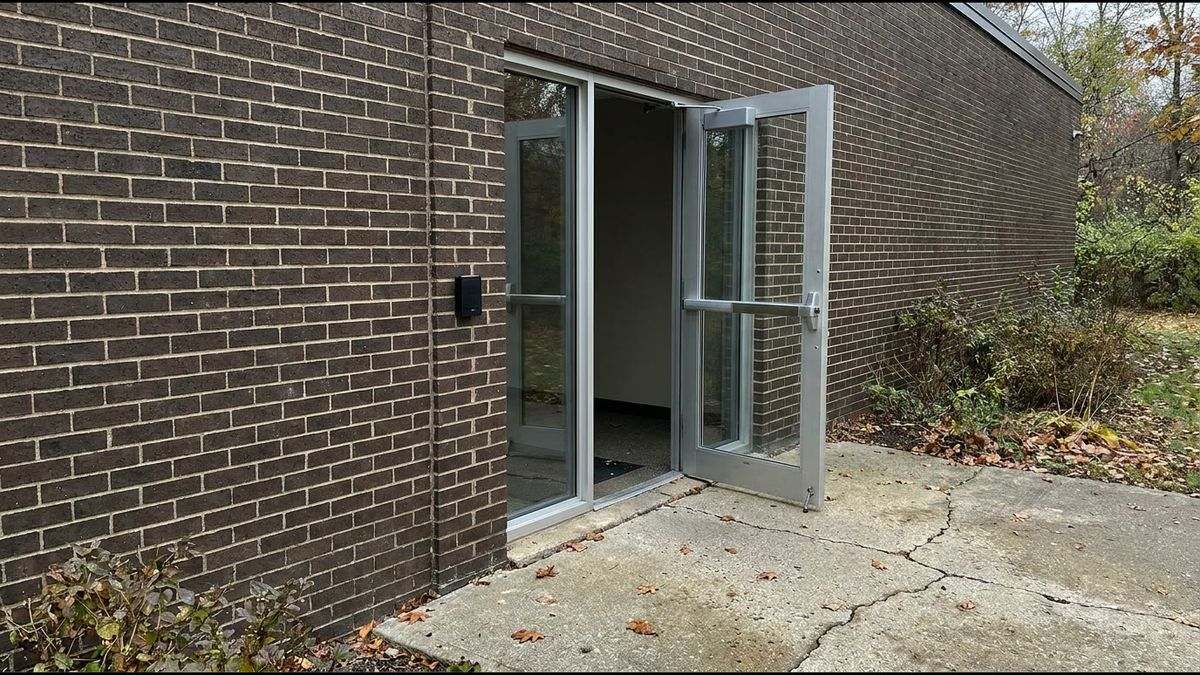
Push on the door after it shuts. If it opens without a card, it never latched. Buildings settle, hinges sag, weatherstripping gets replaced with thicker material, and the latch ends up hitting the strike plate instead of dropping into it. From a few feet away the door looks closed. Anyone who tugs the handle is inside.
Someone defeated it on purpose
Tape over the latch, a rock in the frame, a folded card in the strike, a doormat flipped over the threshold. People do it for a smoke break, a move-in day or a delivery, and then it stays that way all weekend. This is exactly what the campus warning meant by not altering locks or latches.
A secured door has one job after you walk through it: close and latch on its own, every time. If it cannot do that, the card reader beside it is decoration.
Then the Hardware That Catches It
Once the door closes and latches by itself, a few additions make tailgating much harder and make a propped door impossible to ignore.
- Door-held-open and door-forced alerts. A small contact on the door tells the system whether it is open. Most modern access control systems can sound a local buzzer or send the manager an alert when a door stays open longer than a set time, or opens with no card read at all. Many buildings already have this feature and never turned it on.
- An intercom or buzzer at the visitor door. People hold the door for visitors and delivery drivers because there is no easy proper way in. A working intercom with an electric strike and buzzer system gives guests their own route, so "can you let me in?" has a polite answer.
- A latch guard on outswing doors. A steel plate over the gap at the latch stops a card or a tool being slipped in to pop it, and stops tape being stuck over it from outside.
- Individual credentials, not a shared code. When everyone has the same four digits, the code spreads to friends, former tenants and old vendors within months. Individual fobs or codes can be deleted one at a time, and the log shows whose credential opened the door at 2 a.m.
- A camera aimed at the door, not the parking lot. It does not stop anyone, but together with the access log it shows who held the door and when.
One thing we will not do is solve it with a chain, a padlock or a bolt on an exit door. If people may need to get out through that door in a fire, it has to open from the inside in one motion. The right answer there is a proper exit device, which is what our panic bar installation service is for.
Pro Tip from Locksmith Solutions LLC
Do the ten-second test on every card-reader door in your building this week. Open it all the way, let go, and count. Then push on it without badging. If it takes more than a few seconds to close, or it opens when you push, that door is letting people in, and the clocks go back on November 1, which means your residents or staff will be coming and going in the dark.
The Habits That Actually Help
Hardware does most of the work, but two or three habits close the rest of the gap. Keep them simple, because nobody follows a ten-point policy at a door with their hands full.
- Pull the door shut behind you. Do not trust it to close on its own until it has been fixed. Listen for the click.
- Let people badge themselves in. "Sorry, I can't let anyone in, but the intercom is right there" is not rude. Anyone who lives or works in the building has their own way in.
- Never prop a door. If a door needs to be open for a move or a delivery, someone stands at it. When they leave, it closes.
- Report a door that is not closing. Tell the property manager or the office the same day. A slow door is a maintenance ticket, not a quirk of the building.
If You Manage the Building
Managers of apartment communities and offices around Briargate, Downtown and the Powers corridor ask us what to do first when the budget is small. This is the order we suggest.
- Walk every exterior door and do the close-and-push test. List the ones that fail.
- Get the closers adjusted and the latches and strikes realigned. This is the least expensive step and it fixes most of the problem.
- Turn on the door-held-open alert if your system has one, and decide who gets the alert.
- Clear out the credential list. Delete fobs and codes for people who moved out or left. If shared metal keys also open those doors, a commercial lock rekey takes the old keys out of circulation.
- Only then look at new hardware for the doors that still have a problem.
Frequently Asked Questions
Is it rude to not hold the door for someone at my apartment building?
No. A secured door is there so that only people with a credential get in, and a neighbor will have theirs. You do not have to confront anyone. Close the door, and point to the intercom or the leasing office if they ask.
Why does my building's door close fine in summer and not in winter?
The hydraulic oil in the door closer gets thicker in the cold, so the door moves more slowly and may not have enough force left to latch. A seasonal adjustment usually fixes it. A closer that leaks or will not hold its adjustment needs replacing.
Can a door alarm tell when someone tailgates?
An ordinary access system cannot count people, but it can tell when a door has been held open too long or opened without a valid card, and that covers most real cases. Buildings that need to count each person through the door use turnstiles or a two-door entry, which is a bigger project than most apartments and offices need.
What if a renter cannot change the building's door?
Report it in writing to the property manager, and treat your own unit door as the lock that counts. Keep it locked when you are home, and if the frame or the deadbolt is weak, see our guide on how to reinforce a door frame against kick-ins.
A secured door that is not closing or latching in Colorado Springs?
Call Locksmith Solutions LLC. We adjust and replace door closers, realign latches and strikes, and set up access control for apartment buildings, offices and shops during our hours: Monday to Friday, 7:00am to 9:30pm, and Saturday and Sunday, 8:00am to 9:00pm, across Colorado Springs, Fountain, Falcon, Monument and Security-Widefield.